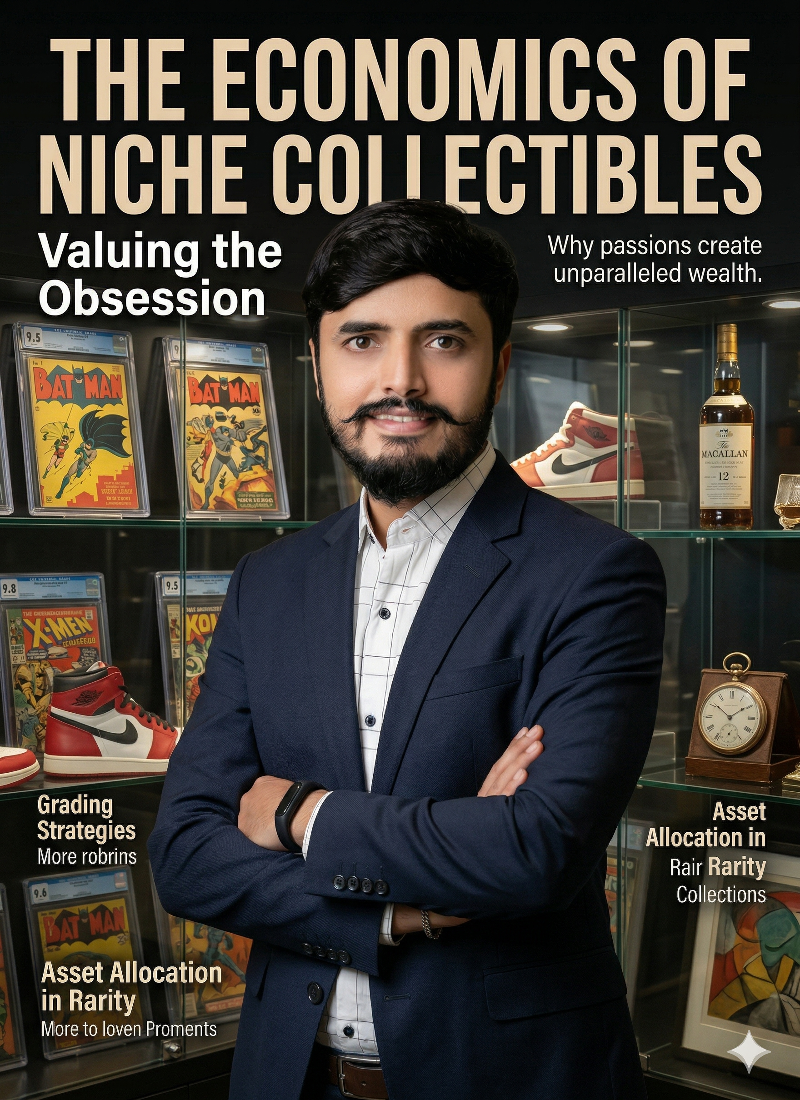
Beyond Child's Play: The Adult Hobbyist Market
 The market for collectibles has matured far beyond comic books and trading cards. Today, niche collectiblesΓÇöspecifically adult die-cast models, high-end resin statues, and specialized hobbyist kitsΓÇörepresent a multi-billion dollar global industry. This is not driven by children, but by affluent adults driven by nostalgia, appreciation for precision engineering, and the thrill of investment speculation.
Analyzing the Supply Chain
The production of high-end die-cast models is a masterclass in global supply chain complexity.
Licensing: Before a single CAD drawing is made, manufacturers must secure expensive, highly restrictive licensing agreements from automotive brands (e.g., Ferrari, Porsche) or entertainment franchises.
Precision Engineering: Modern 1:18 scale models consist of hundreds of individual parts, requiring microscopic precision in molding, painting, and assembly.
The China Factor: Historically, manufacturing has been heavily centralized in Southern China due to the specialized tooling expertise required. However, recent geopolitical tensions and rising labor costs are forcing brands to explore diversification, causing supply chain bottlenecks and delayed releases.
Aftermarket Valuation and Speculation
The defining characteristic of the modern collectible market is the aftermarket. Manufacturers intentionally utilize "limited production runs" (e.g., only 500 units worldwide) to artificially constrain supply and drive FOMO (Fear Of Missing Out).
The Speculator Economy
Once a limited model sells out at retail, it enters the secondary market (eBay, specialized auction houses, enthusiast forums). Here, prices can skyrocket. A die-cast model purchased for $300 can easily command $1,000+ within weeks if the demand outstrips the heavily constrained supply. This has attracted "flippers"ΓÇöindividuals who buy solely to resellΓÇöwhich frustrates genuine collectors but undeniably injects immense capital and velocity into the market.
Consumer Behavior and Psychology
Understanding the collector requires analyzing deep-seated psychological drivers:
Nostalgia: Reclaiming a piece of childhood or owning a miniature of an unattainable dream car.
Community: Collectibles foster intense online and offline communities, providing a sense of belonging.
Status: In certain circles, owning a rare "Chase" variant or a highly sought-after resin model is a significant status symbol.
Conclusion
The economics of niche collectibles is a fascinating microcosm of supply and demand, heavily influenced by emotional drivers and artificial scarcity. As long as manufacturers carefully manage the balance between satisfying demand and maintaining exclusivity, the adult hobbyist market will continue its lucrative expansion.