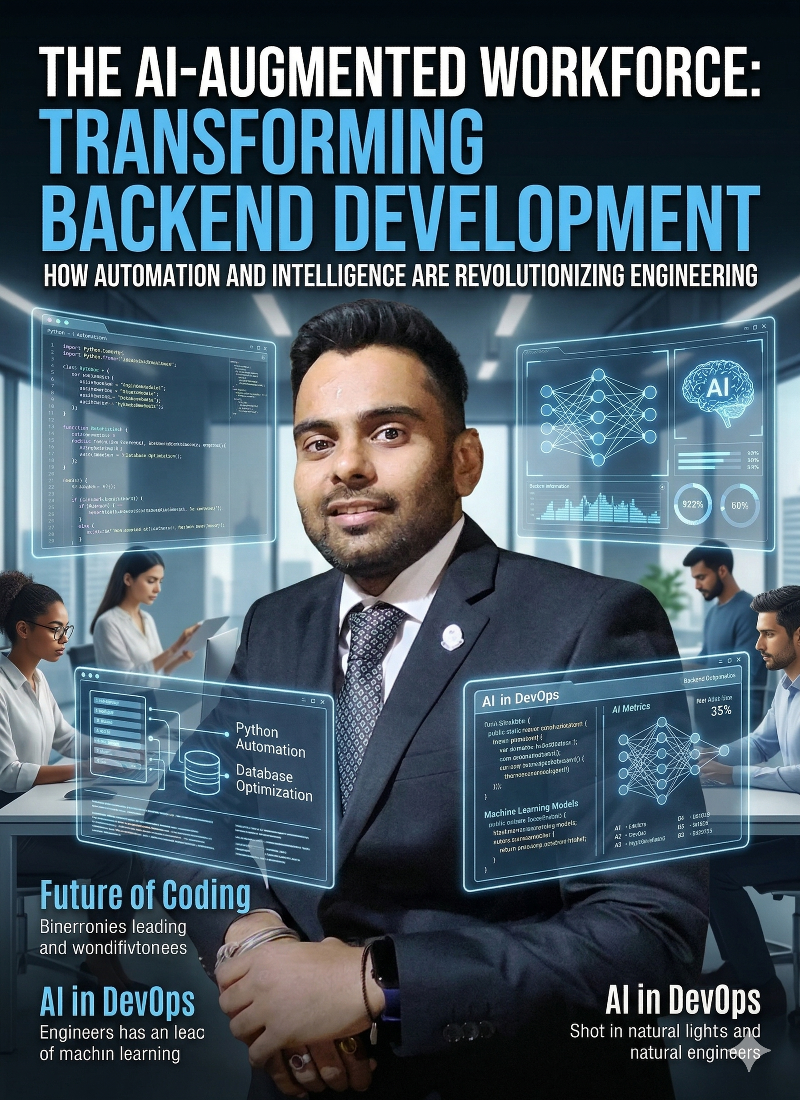
The New Era of Software Engineering
 Artificial Intelligence is no longer just a feature embedded in consumer apps; it is fundamentally altering how software itself is built. AI coding assistantsΓÇölike GitHub Copilot, Tabnine, and specialized internal modelsΓÇöare transitioning from novelty tools to mandatory workflow integrations. The backend development landscape, traditionally characterized by complex logic, database management, and rigorous security protocols, is experiencing a profound acceleration.
Reshaping Backend Development Timelines
Backend engineering often involves significant boilerplate codeΓÇösetting up API routes, establishing database connections, and writing standardized CRUD (Create, Read, Update, Delete) operations.
Boilerplate Generation: AI assistants can generate complete foundational structures from simple natural language prompts, reducing initial setup time from days to hours.
Intelligent Debugging: By analyzing stack traces and contextual codebases, AI tools can pinpoint logic errors and suggest optimized fixes, drastically reducing time spent on QA.
Automated Testing: Generating comprehensive unit and integration tests is historically tedious. AI models can automatically write test suites covering edge cases that human developers might overlook.
Strategic Resource Allocation
With AI handling the repetitive, time-consuming tasks, technical resource allocation is undergoing a paradigm shift.
Shift to Architecture: Senior developers can spend less time reviewing syntax and more time designing scalable system architectures.
Elevating Junior Devs: Junior engineers are empowered to tackle more complex tasks earlier in their careers, guided by AI guardrails.
Cross-Functional Collaboration: Reduced coding times allow engineering teams to interface more deeply with product managers and UX designers, ensuring the technical build aligns perfectly with user needs.
Security and Ethical Considerations
Despite the speed, the AI-augmented workforce introduces new risks. AI models can inadvertently introduce vulnerabilities or hallucinate incorrect API implementations. Therefore, the role of the human developer is evolving from "coder" to "reviewer and orchestrator." Robust code review practices and automated security scanning remain paramount.
Conclusion
The AI-augmented workforce is not about replacing developers; it is about supercharging them. Organizations that successfully integrate these tools will realize faster time-to-market and more resilient backend systems, gaining a decisive competitive advantage.